
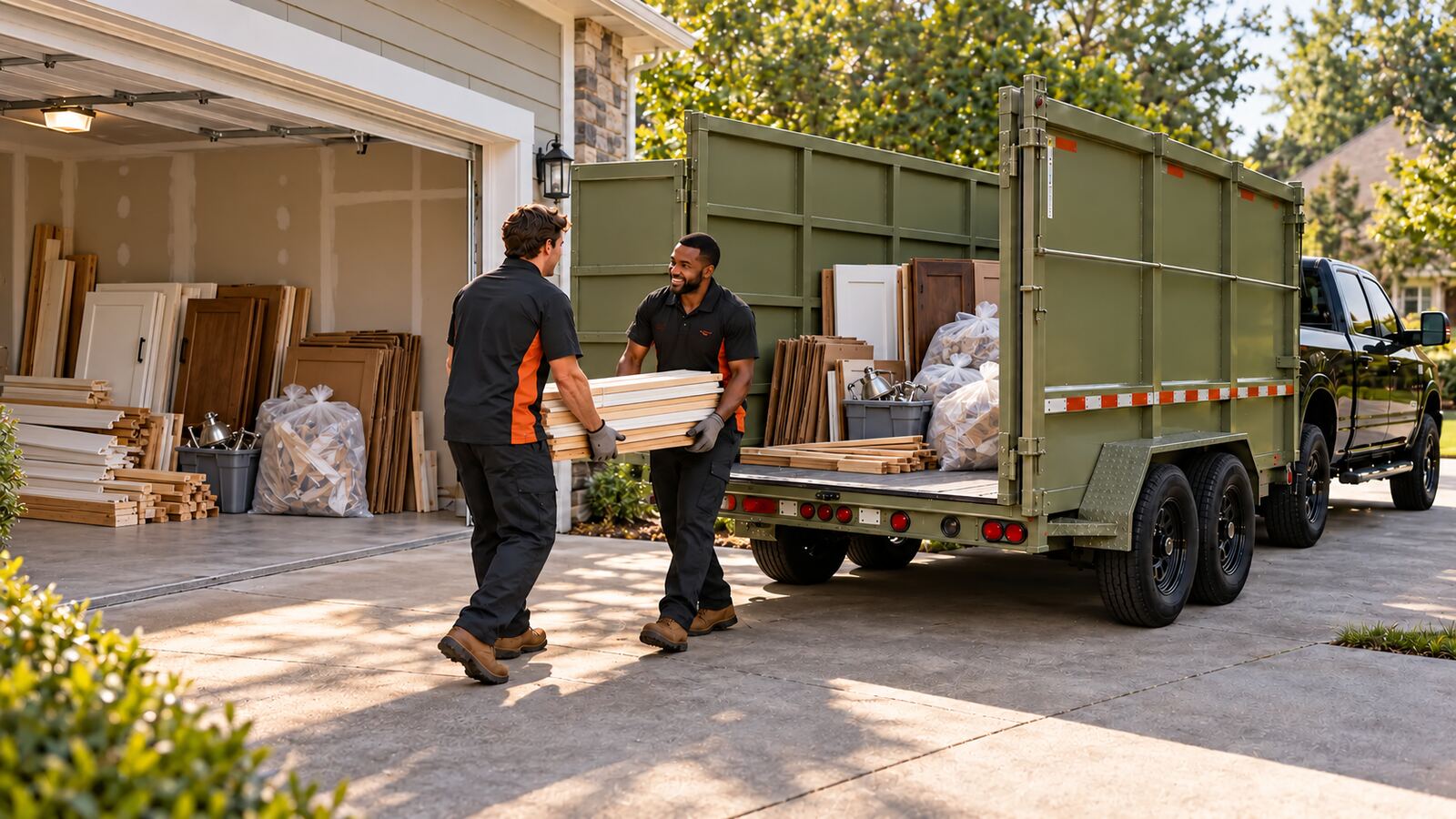
Before requesting construction-debris pickup, make a material list, separate the load into clear groups, photograph the pile and access route, and identify anything unusually heavy, sharp, wet, or difficult to reach. Confirm that the removal company accepts every material before scheduling.
A bathroom update, flooring project, cabinet replacement, or other home renovation can create more debris than expected. The cleanup is easier to estimate when the removal team can see what was removed, how much there is, and how safely it can be reached.
For accepted cleanup work in Winder, Amigo Junk Removal serves Winder and Northeast Georgia. Call or text 770-616-7742 or email amigojunkremovalga@gmail.com with photos and project details.
Start with a simple project inventory
Write down what part of the property changed and what the cleanup pile contains. You do not need construction terminology. A useful description might say: “First-floor kitchen update with removed cabinets, wood trim, drywall pieces, metal fixtures, cardboard packaging, and bagged sweep-up debris.”
That description is more useful than “one pile of construction junk” because different materials affect handling, loading, sorting, and disposal. Include the project area, main material groups, approximate number of bags or piles, whether debris is loose or stacked, and whether anything is long, bulky, sharp, wet, unusually heavy, or difficult to identify.
Do not guess about an unknown material. Photograph it separately and ask before anyone moves or disturbs it.
Sort the debris into visible groups
Separating the pile makes it easier to understand and may help identify reuse or recycling opportunities. Useful groups can include clean wood and trim, drywall pieces, metal fixtures or hardware, cabinets and doors, cardboard packaging, and bagged light cleanup debris.
Keep unidentified or potentially regulated material separate and seek appropriate professional guidance. Do not mix liquids, sealed containers, or unknown materials into an ordinary debris pile.
Sorting does not guarantee that a particular item can be recycled or accepted. Facilities set their own preparation, quantity, and acceptance rules, so confirm those details before transport.
Take photographs that answer estimate questions
Show the complete pile
Stand far enough back to capture the full load. If debris is stored in several places, send one wide photograph of each location.
Show individual material groups
Take closer pictures of wood, drywall, metal, fixtures, bags, and anything unidentified. Add approximate pile length, width, and height when practical.
Show the entire removal route
Photograph doors, stairs, gates, hallways, slopes, parking areas, and the path between the debris and loading area. Mention narrow turns, soft ground, limited parking, or a long carry. These details can affect labor and access.
Check the municipal option before scheduling
The City of Winder currently lists construction materials among the items excluded from ordinary residential bulk-item collection. That makes it important to confirm another lawful removal route instead of assuming renovation debris can be left at the curb.
Rules can change, so review the City’s current Garbage & Bulk Pickup page before setting anything out.
Decide whether full-service pickup fits the project
A removal crew may be a practical fit when the debris is ready to leave, you want lifting and loading handled, the project has a defined pile, or there is limited space for a container. A rental container may fit an ongoing project when approved debris will be created over several days, the project team can load it safely, and the property has suitable placement space.
Use the complete junk removal versus dumpster rental guide to compare labor, timing, placement, and full pricing factors. Amigo provides full-service removal and does not advertise dumpster rentals.
Prepare a safe staging area
The staging location should be accessible without creating a hazard or damaging the property. Do not block sidewalks, roads, exits, utility equipment, fire access, or drainage areas.
- Keep children and pets away from the debris.
- Contain sharp edges or make them clearly visible.
- Stack material only when the pile will remain stable.
- Clear tools, cords, vehicles, and loose material from the route.
- Protect finished floors or fragile surfaces along an indoor route.
- Leave heavy material in place if moving it could cause injury.
- Do not disturb material that may need specialized evaluation or handling.
Ask where the debris should be staged. Do not drag everything to the curb unless that is part of the agreed plan.
Give the estimator the details that change the job
A useful estimate request includes your Winder-area pickup location, project type, material list, approximate quantity, wide and close photos, the exact debris location, and your preferred timing. Describe stairs, gates, long carries, slopes, tight turns, and parking limits. State whether anything remains attached or may require dismantling.
These details help determine whether the work fits the company’s service and whether an onsite assessment is needed. For general pricing factors, read the Winder junk-removal cost guide.
Confirm acceptance before the crew arrives
Construction and renovation piles can contain very different materials. Never assume the entire load is accepted simply because a company offers junk removal. Ask:
- Do you accept every material shown in my photographs?
- Should anything be kept separate or specially prepared?
- Is dismantling included, or must everything already be detached?
- Is the estimate based on photos, an onsite review, or both?
- Are labor, loading, hauling, and disposal included in the quoted scope?
Amigo confirms work from its current operating policy. This guide does not promise acceptance of any specific material, specialized handling, recycling destination, or disposal partnership.
Look for reuse before the final cleanup
Some intact building components may have value for reuse. The U.S. Environmental Protection Agency explains that source reduction, salvage, reuse, and recycling can reduce disposal where suitable markets and safe handling exist.
Before mixing usable pieces into the debris pile, consider whether clean cabinets, doors, hardware, fixtures, or unused material should be retained or directed to an appropriate reuse channel. Confirm that a recipient wants the material before transporting it or describing it as a donation.
Read the EPA’s current guidance on sustainable management of construction and demolition materials and reducing, reusing, and recycling construction materials.
Construction debris pickup checklist
- List the project area and material categories.
- Separate debris into visible groups.
- Keep unidentified material apart.
- Take wide and close photographs.
- Estimate the pile dimensions or item count.
- Photograph stairs, gates, doors, and the loading route.
- Clear obstacles from the work path.
- Confirm every material is accepted and what labor is included.
- Keep the agreed staging area accessible.
- Save the estimate and contact information.
Request a construction-cleanup estimate in Winder
For accepted cleanup work, request a Winder junk-removal estimate, call or text 770-616-7742, or email amigojunkremovalga@gmail.com.
Send the project type, material list, photos, approximate quantity, pickup location, and access details. Amigo Junk Removal — Winder and Northeast Georgia will confirm whether the exact materials and requested work fit its current service before scheduling.
Frequently asked questions
Can Amigo remove construction debris in Winder?
Amigo confirms each project from photographs and a material list before scheduling. Do not assume every construction material or cleanup task is accepted. Call or text 770-616-7742 with the project details.
Does Winder’s regular bulk pickup accept construction materials?
The City of Winder currently lists construction materials among the items excluded from its ordinary residential bulk-item collection. Check the City’s official page for the latest rules before placing debris outside.
What photographs should I send for an estimate?
Send a wide photograph of the entire pile, closer pictures of each material group, and photographs of the route to the loading area. Include doors, stairs, gates, slopes, and parking limitations.
Do I need to move construction debris to the curb?
Not unless that is part of the agreed pickup plan. Share the current location and access route when requesting an estimate, and leave heavy material in place if moving it could be unsafe.
Can construction materials be reused or recycled?
Some clean materials may have reuse or recycling options, but acceptance depends on the facility, condition, quantity, and preparation rules. Confirm the destination before transport and do not assume an item will be recycled.
Is junk removal better than a dumpster for renovation debris?
It depends on the project. Full-service removal includes loading and may fit a finished pile, while a rented container may fit a longer project when the customer can load it and has suitable placement space.